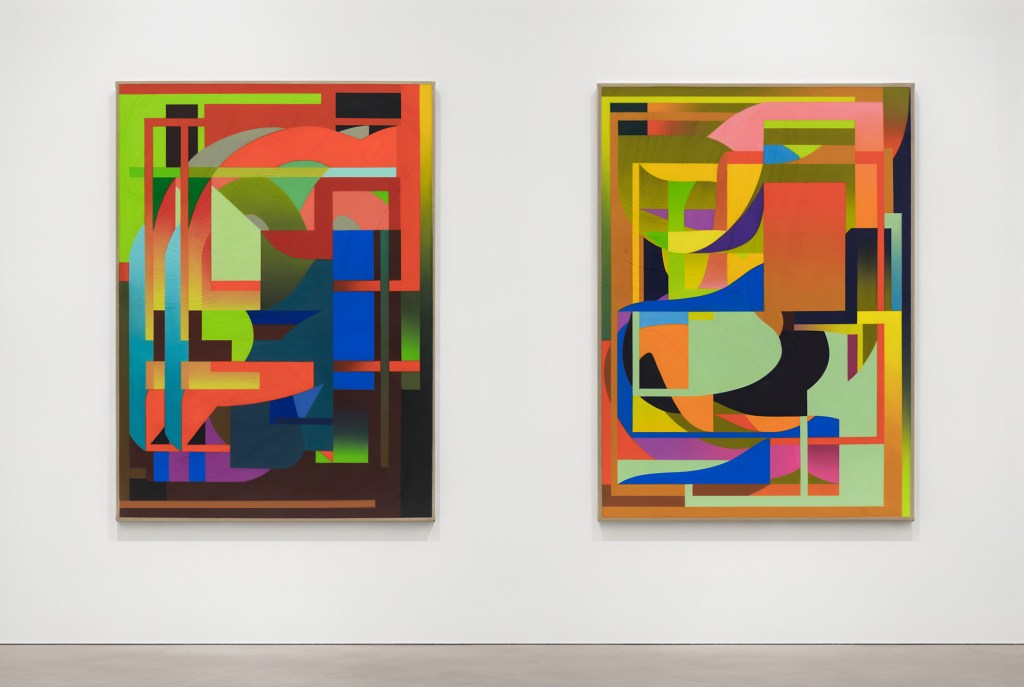
Installation view, Post-Analog Painting II at The Hole, NYC. 2017
Digital media is transforming not only the practice of painting but also how the medium is defined more broadly. Historically, painting has adapted to new spaces, materials, and surfaces, often in response to emergent technologies. These shifts have not only altered the way paintings are made but also the types of spaces painting can occupy. Today, software-based composition, digital screens, and networked circulation are reshaping the conditions under which paintings are produced and encountered. They challenge painting’s traditional claims to representation, originality, and ultimately their status as material things.

Detail, No title, Oil on Linen, 129 x 94 cm. 2017
What began as a practical strategy to economize Dekkenga’s practice by painting over discarded paintings evolved into a broader inquiry into the virtual quality of images, and the tension between the underlying materiality of the paint and the image painted over it remains central to her work. By blurring boundaries between shapes, she unifies the image while emphasizing its separation from its material foundation. The visual effect encourages a constant shift of focus between two distinct visual phenomena; the underlying texture and the painted image. This discordant alignment challenges the viewer’s expectations of the painting’s history and requires them to question what they’re seeing and thinking. Through years of practice, Dekkenga has integrated these concerns with digital processes by using design software to test formal relationships by inverting palettes and generating variations in ways traditional media cannot. Over time, the visual language native to computer systems like specific color relationships and spatial logic became a primary subject of her work.
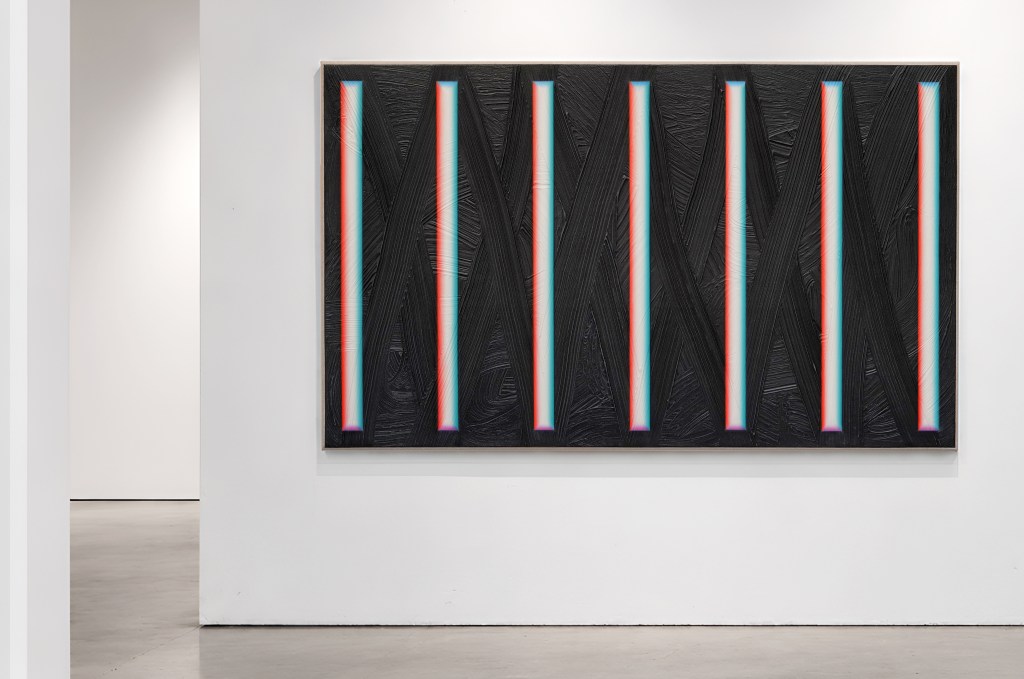
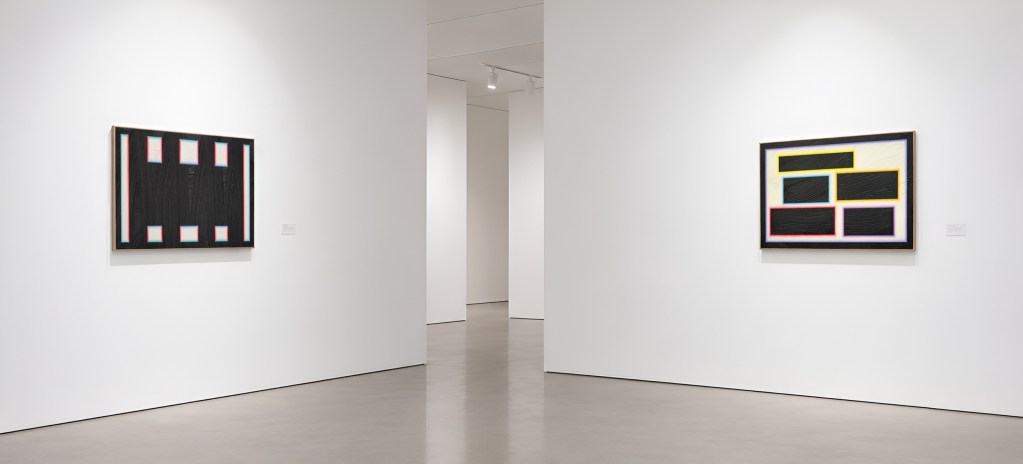
(top), No title, Oil on Linen, 94 x 148 cm. 2026; (bottom x 2), No title, Oil on Linen, 69 x 109 cm, 2026.
What began as an exploration of the boundary between the virtual quality of images and materiality developed into a broader inquiry into metaphysics and ontology. Painting became a means of examining how we understand ourselves and our relationship to the world, as well as how technology shapes the models through which we understand consciousness. Questions concerning mind-body dualism and idealism remain central to Dekkenga’s thinking and provide a conceptual foundation for how she apprehends information. At times, these concerns become the explicit focus of a painting; at other times, they function as an underlying framework for understanding other aspects of the world.

Installation view, Screensaver 001: New Tendencies/Bit International. 2024.
To further investigate the emerging dialectic between painting and digital technology, Dekkenga’s ongoing series of digital paintings began as an inquiry into whether the digital sketches for her paintings could function as screensavers. The project has since expanded into a study of form, color relationships, and the ways medium-specific conditions structure our viewing experiences. Paintings and screensavers share a domestic role; both activate an existing site, whether a wall or a computer screen. Yet the screensaver operates as a portable, networked file rather than a singular object fixed in place and time. It can appear across multiple screens and contexts at once, shifting the work away from the logic of the unique object and toward circulation and proliferation. This multiplicity is not incidental but constitutive: the work exists as a set of relational events distributed across time and space, rather than as a single static object.
Creating a screensaver parallels painting in that it unfolds through a sequence of contingent formal decisions, where each move establishes the conditions for the next and the outcome cannot be fully predicted in advance. Time becomes a compositional material: duration carries color and form forward through slow, often imperceptible shifts that accumulate gradually. These transitions are not random; each change in hue, saturation, value, and form is deliberated, translating painterly decision-making into a digital process. What began as a test of whether a painting could inhabit a monitor became an inquiry into how temporality differentiates static and moving images, and whether the screen can be refigured from an analytic interface into a sensual pictorial space.

Hanna and Habeeb, 2024.
Intrigued by the potential of games to challenge traditionally structured social relationships through direct participation, Dekkenga began experimenting with game-based formats. Rather than reproducing the competitive, zero-sum dynamics common to conventional games, she designs rule-based systems around synergistic, cooperative, and altruistic principles. These structures encourage participants to critically examine embedded value systems through active engagement rather than passive contemplation.

Non-Zero sum 3, wood and acrylic paint, 60 x 36 x 9 cm, 2022.


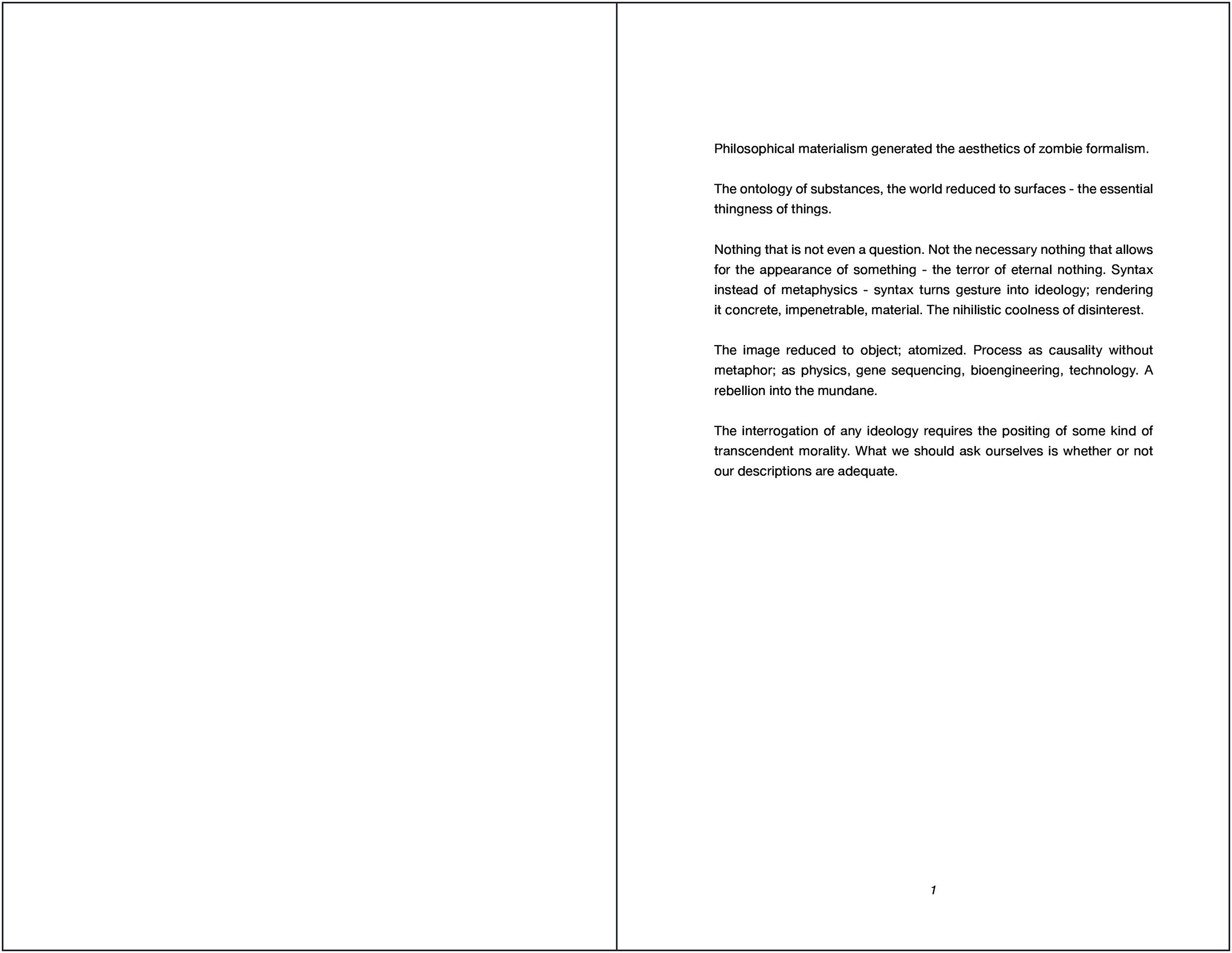

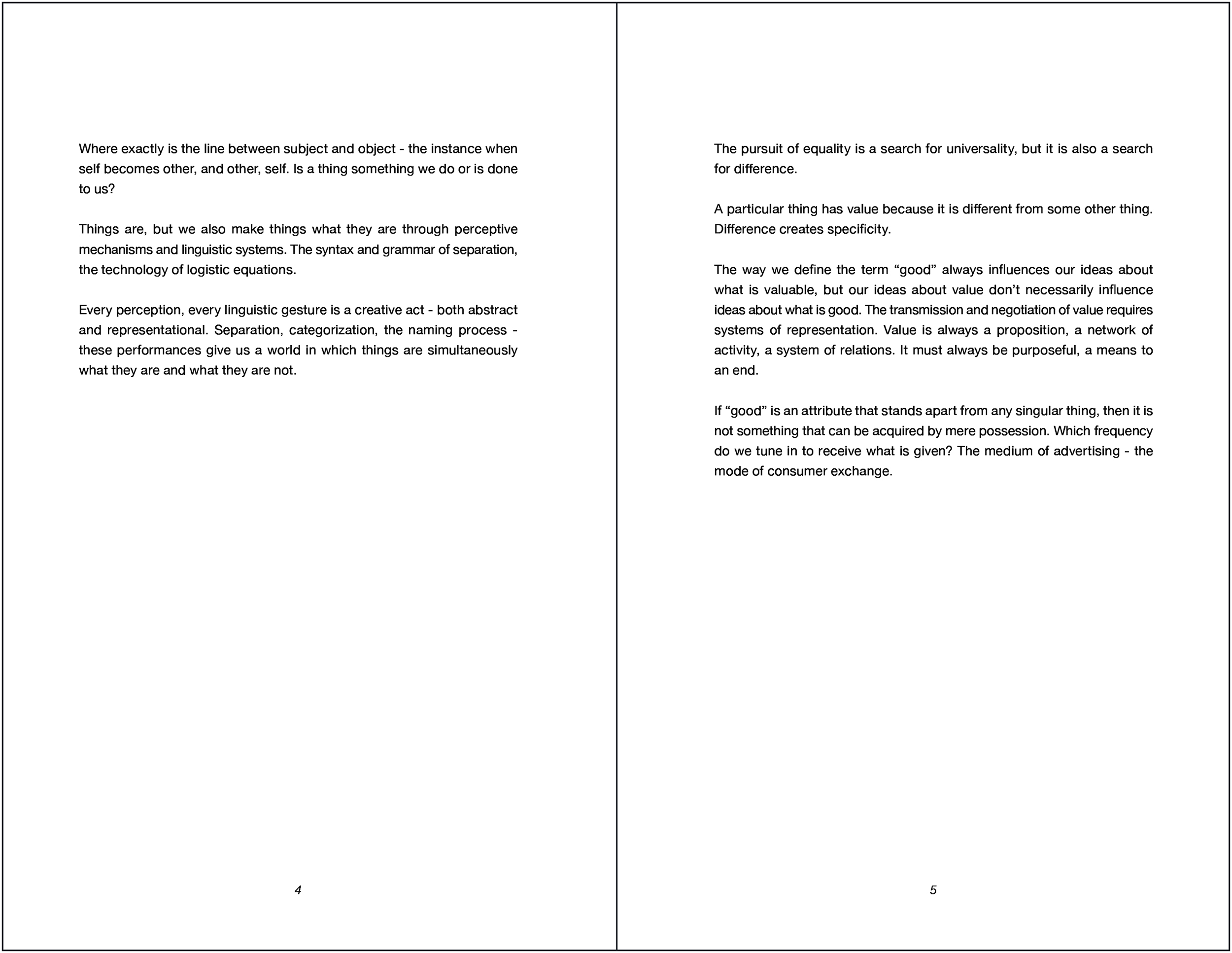


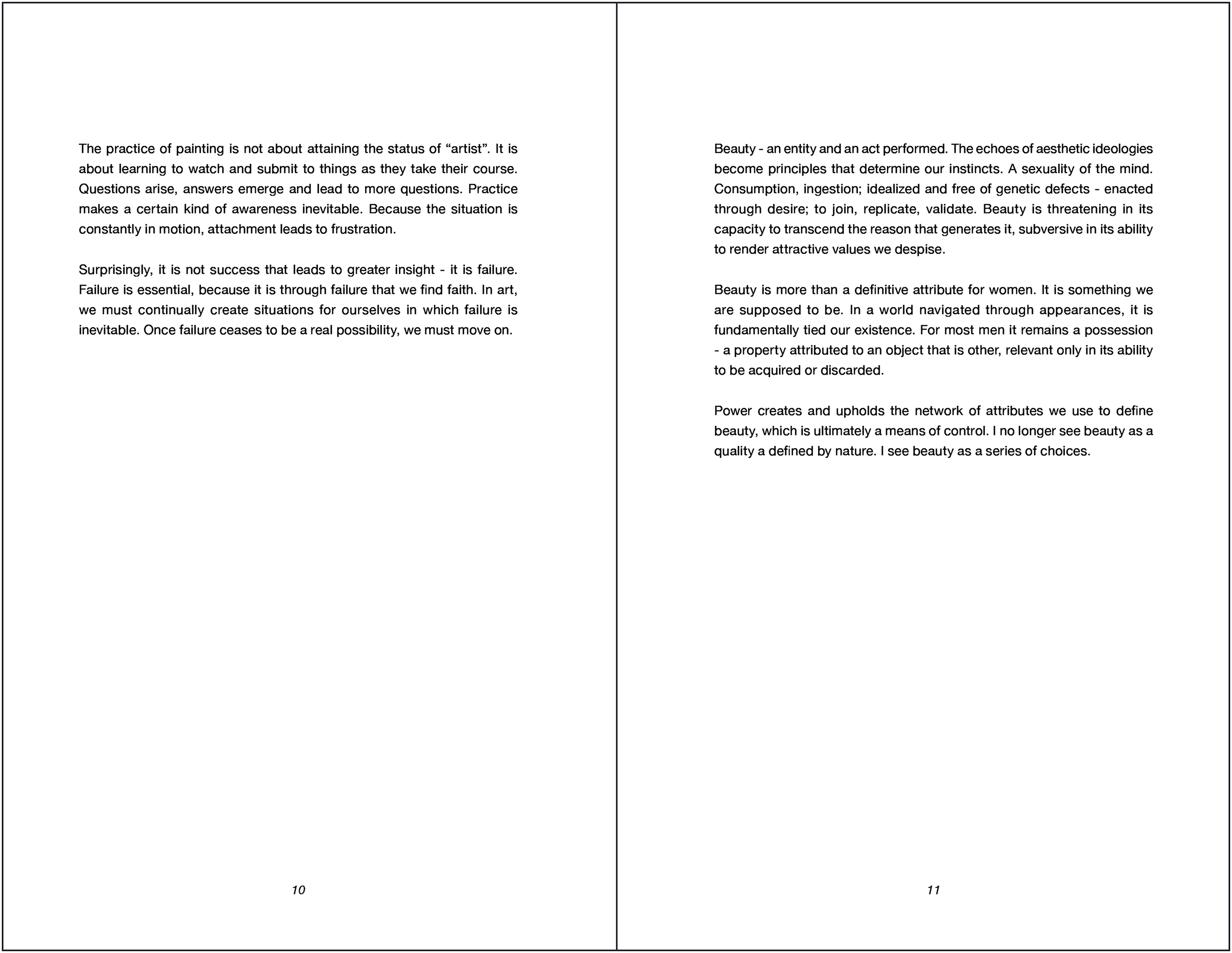


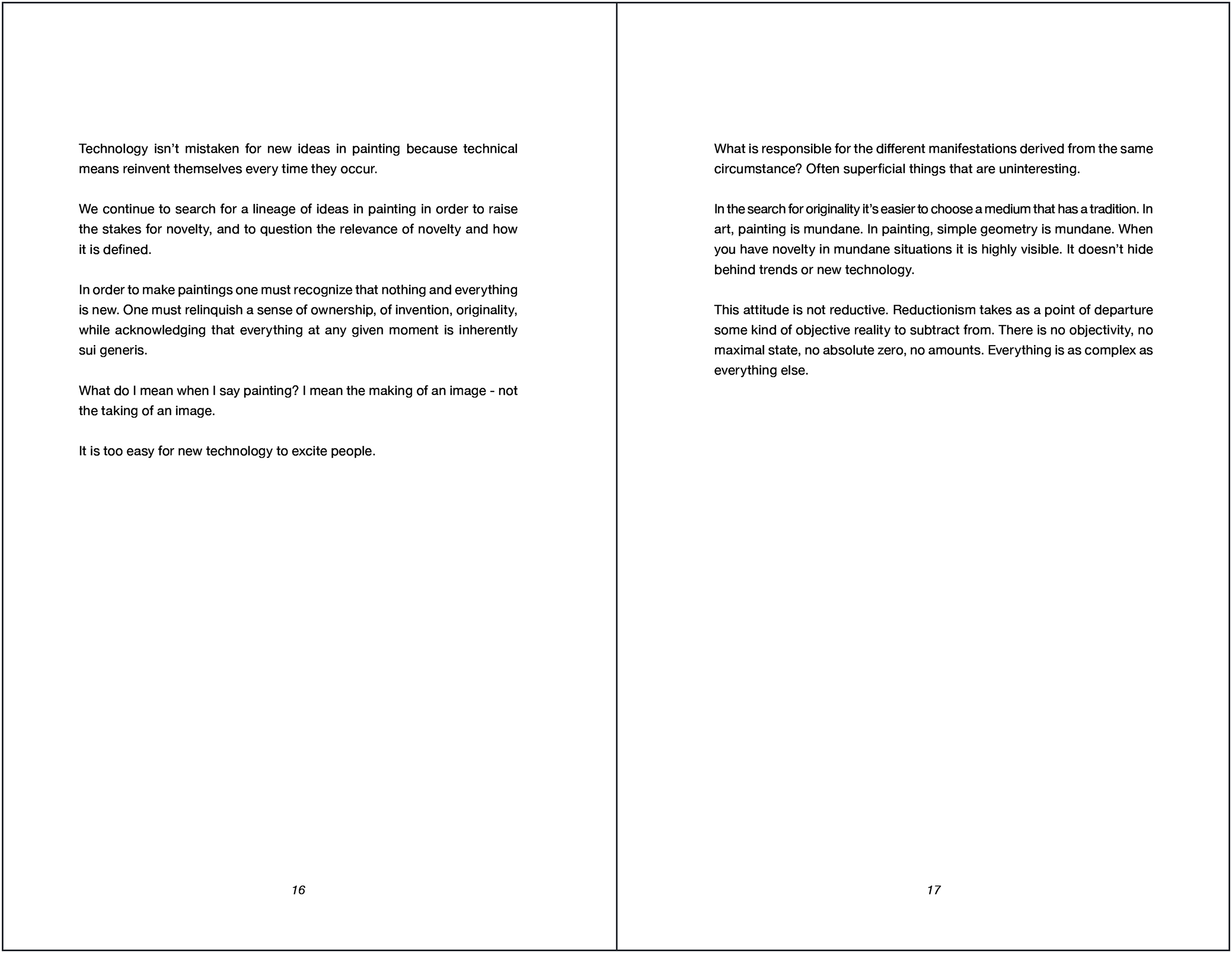

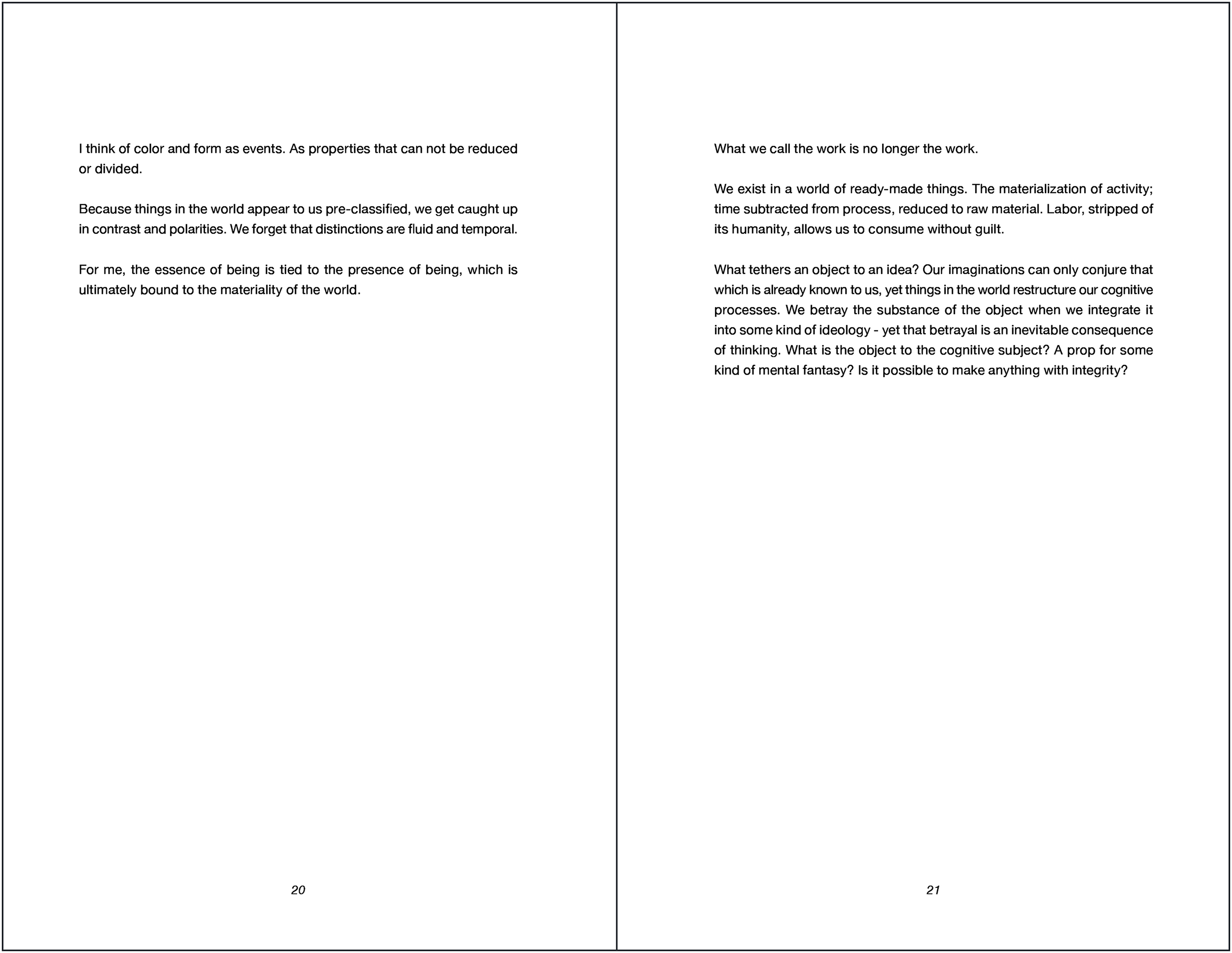


Mariah Dekkenga, Studio Notes 2016/17.
Dekkenga’s critical writing practice operates in parallel with her studio work, extending her sustained inquiry into the social and ideological frameworks that organize contemporary artistic practice. Her texts examine how systems of representation, participation, and exchange produce meaning while reinforcing particular models of agency, value, and social relation. Writing functions not as a secondary commentary on the work, but as another site through which these structures are analyzed, contested, and reformulated.